

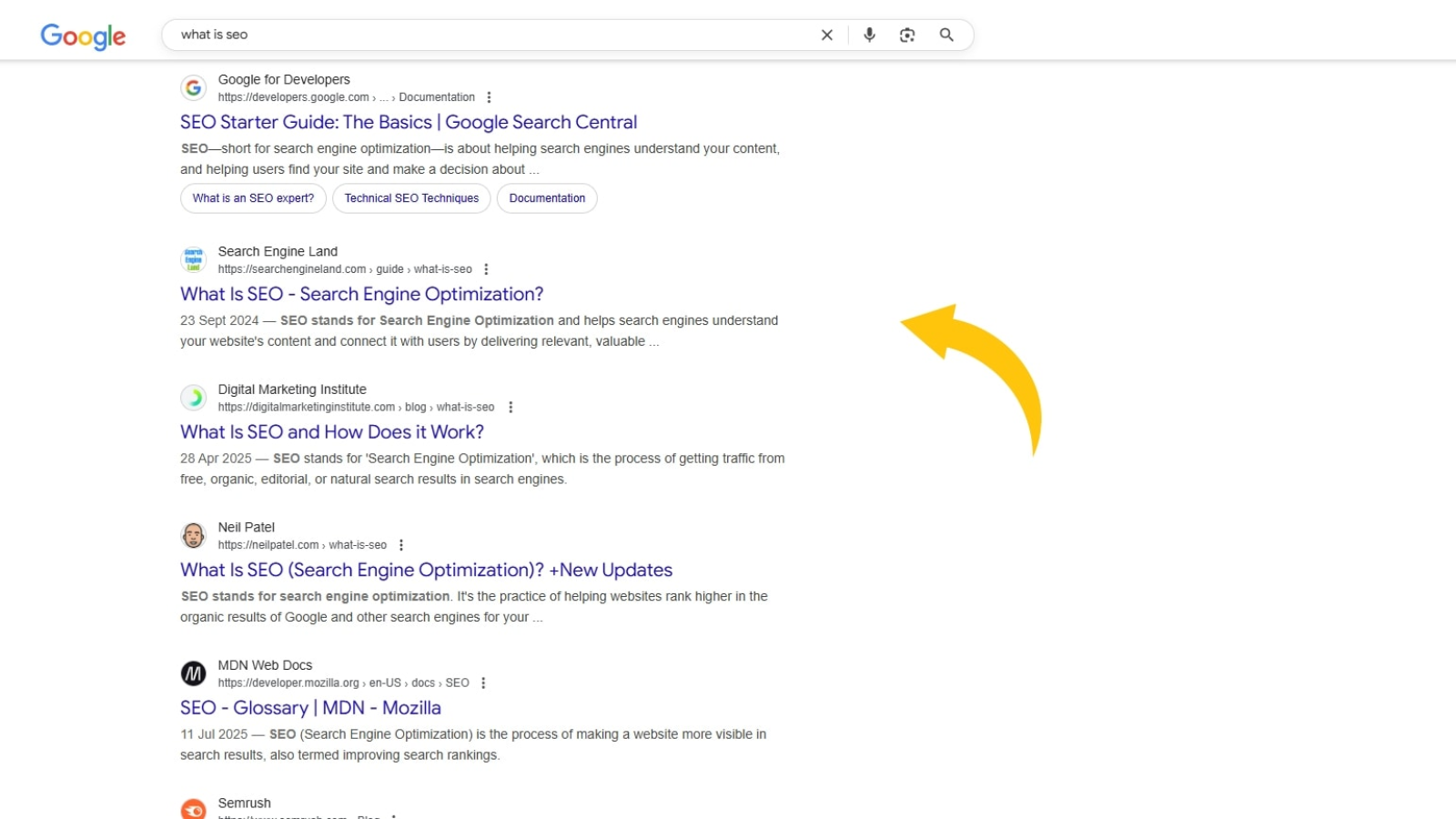
The term "10 blue links" refers to Google's traditional search results page (SERP): ten organic results, each with a blue clickable title, green URL, and brief meta description. This structure dominated Google's early years and defined SEO. Ranking in these ten positions was the standard for visibility and success.
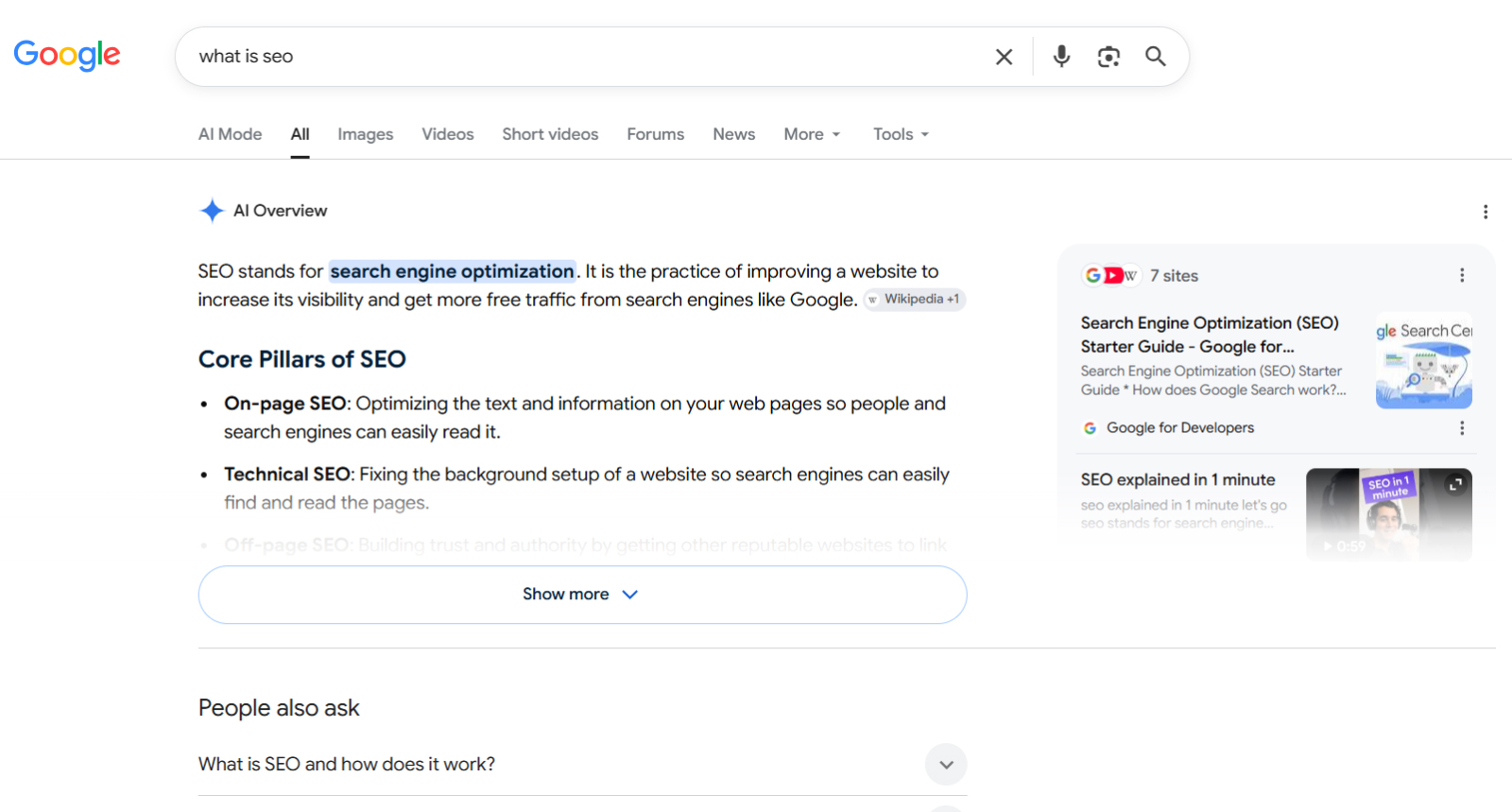
How has Google's search results page changed?
Today's SERP looks very different from that simple list. A single search can now show featured snippets, knowledge panels, AI-generated overviews, People Also Ask boxes, local map packs, image and video carousels, and shopping or news results, often before any organic listing appears:
Featured snippets that answer questions directly.
Knowledge panels and AI-generated overviews.
People Also Ask boxes.
Local map packs.
Image and video carousels.
Shopping and news results.
That shift is measurable. Google searches ended without a click 68% of the time in the US during the first four months of 2026, up from about 60% in 2024, according to SparkToro's analysis of Similarweb clickstream data. AI Overviews now appear on more than one in five Google searches, and when they do, click-through rates (CTR) to organic results drop by nearly 60%. SEOs call a search that ends with no click a "zero-click search": the person gets their answer on the results page and never visits a website.
Why do the "10 blue links" still matter?
Even with snippets, panels, and AI overviews crowding the page, the ten organic positions remain the backbone of organic SEO: placement earned through relevance and authority, not paid for. For SEO professionals, they are still the foundation for:
Measuring true organic visibility
Tracking click-through performance
Understanding how SERP real estate has shifted
These ten positions remain a useful benchmark and a reminder of where SEO began.
What does modern SEO need to focus on beyond rankings?
Ranking first in organic results no longer guarantees the top of the page. A number one listing can sit below a featured snippet, an AI overview, or a local pack, all competing for the same click.
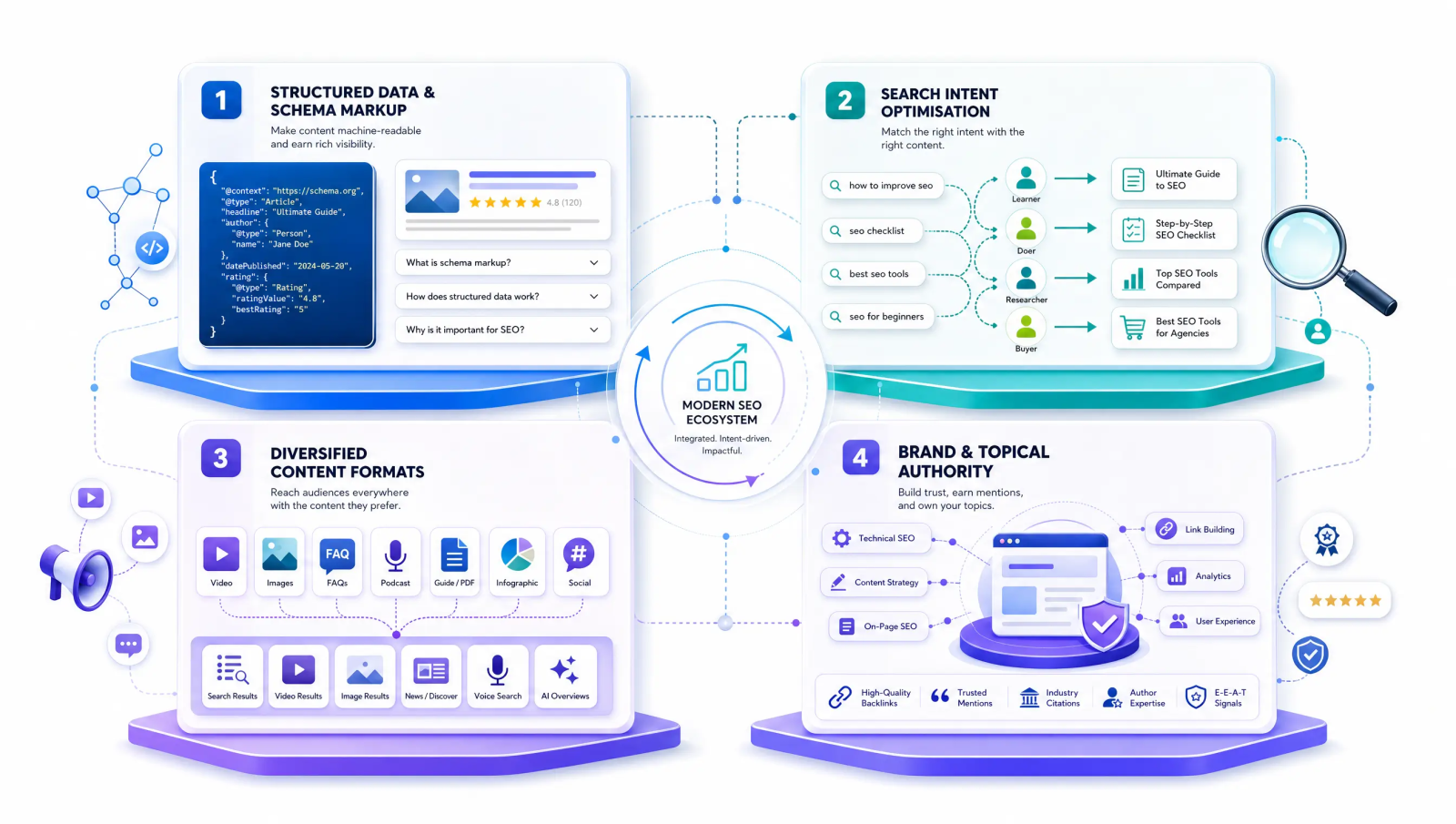
Today's SEO must work across a multi-layered, zero-click SERP rather than chase a single blue link position. The goal is broad visibility wherever the audience searches, not just a top ten spot:
Structured data and schema markup, so Google can understand content and display rich snippets
Search intent optimisation, aligning content with what users actually want to know or do
Diversified content formats, using video, imagery, and FAQs to appear across multiple result types
Brand and topical authority, earning enough trust to rank in both organic and featured placements
How can brands own more of the search results page?
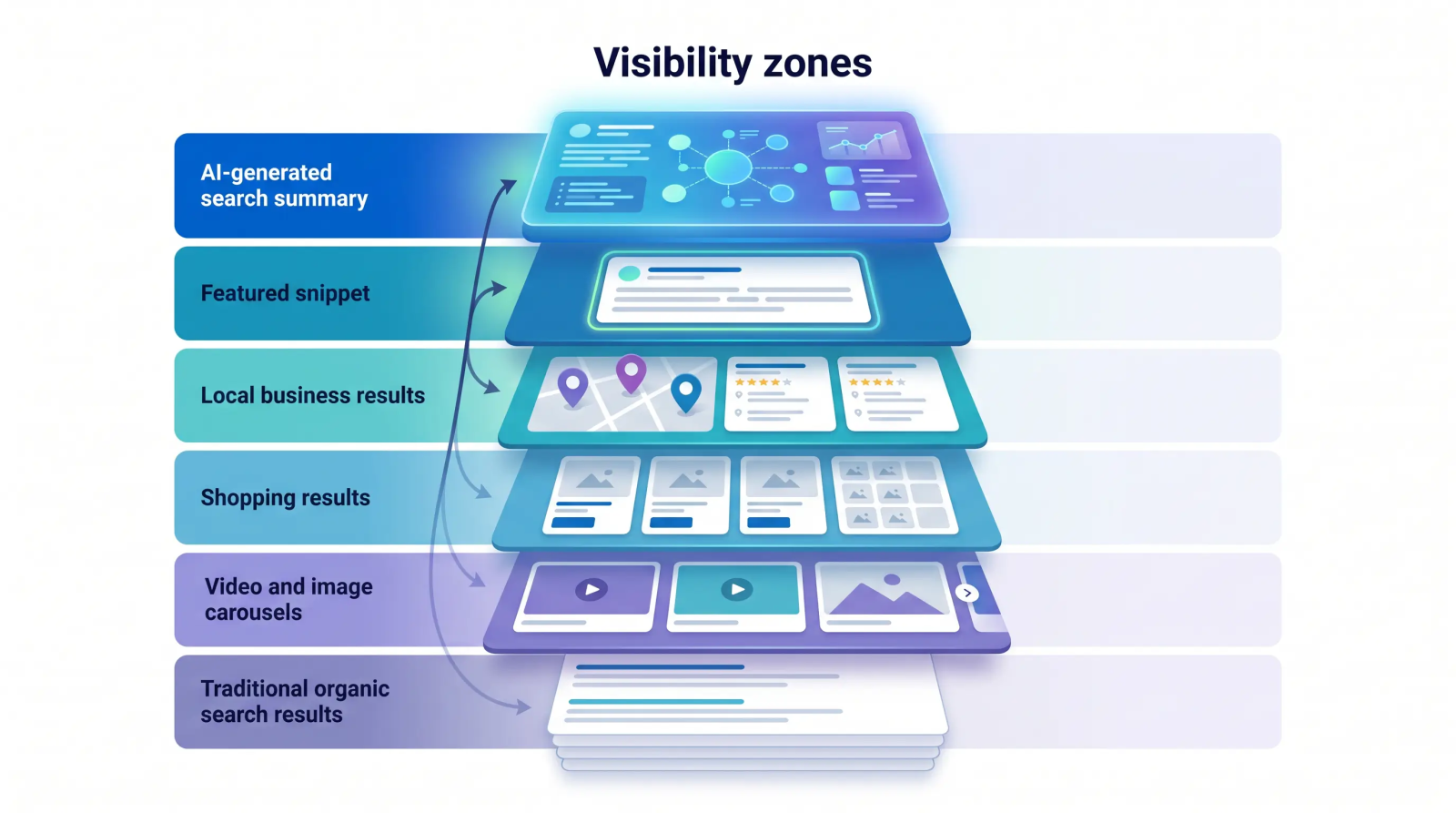
The ten blue links used to be the entire game. Now they are one part of a page where every snippet, panel, and carousel competes for attention. Owning that wider space means:
Appearing in featured snippets
Showing up in local or map results
Ranking videos on YouTube and Google Video carousels
Getting products listed in Shopping or Merchant feeds
Building presence through AI-generated search summaries
For most searches today, that wider footprint is a bigger prize than the number one spot ever was.


