As of 2025, multiple industry reports suggest that approximately one in five global internet users regularly engage with voice search, while an increasing share of high-intent and informational queries are influenced or directly resolved by AI-assisted search systems such as Google’s Search Generative Experience (SGE) and OpenAI’s ChatGPT. While adoption varies by market, query type, and rollout stage, these systems are already reshaping how users discover, evaluate, and trust information. This represents the most significant shift in search behaviour since the rise of mobile.
The traditional “10 blue links” model is steadily giving way to contextual, conversational, and multimodal search experiences that prioritize meaning, relationships, and intent over exact keyword matching.
Brands that continue optimizing only for text-based search risk losing visibility. The next phase of search visibility depends on how effectively content aligns with AI interpretation, entity understanding, and conversational relevance.
- Understanding the Shift: From Keywords to Conversations
- Voice and AI SEO Strategies
- Optimize for Conversational Queries
- Target Featured Snippets and Voice Search Results
- Use Schema Markup to Power Voice and AI Search
- Build Around Search Intent Optimization
- Strengthen Technical and Mobile Voice SEO
- Enhance Local Voice Search Optimization
- Track and Optimize for AI + Voice Search Performance
- The Future: Predictive and Multimodal Search
- Bringing It All Together
- Conclusion
- FAQs on Optimizing for Voice Search and AI Queries
Understanding the Shift: From Keywords to Conversations
Voice and AI queries are changing how search works. When users speak instead of typing, they use full, natural questions. For example, rather than searching “best SEO tools,” they ask, “What are the best tools for voice search SEO?”
Google and broader industry research consistently show that voice interactions are most common on mobile devices and among working-age adults, particularly when users are multitasking or seeking quick answers. As a result, search engines increasingly interpret natural language, context, and intent, rather than relying solely on keyword patterns.
To remain discoverable, content must balance human clarity with machine-readable structure.
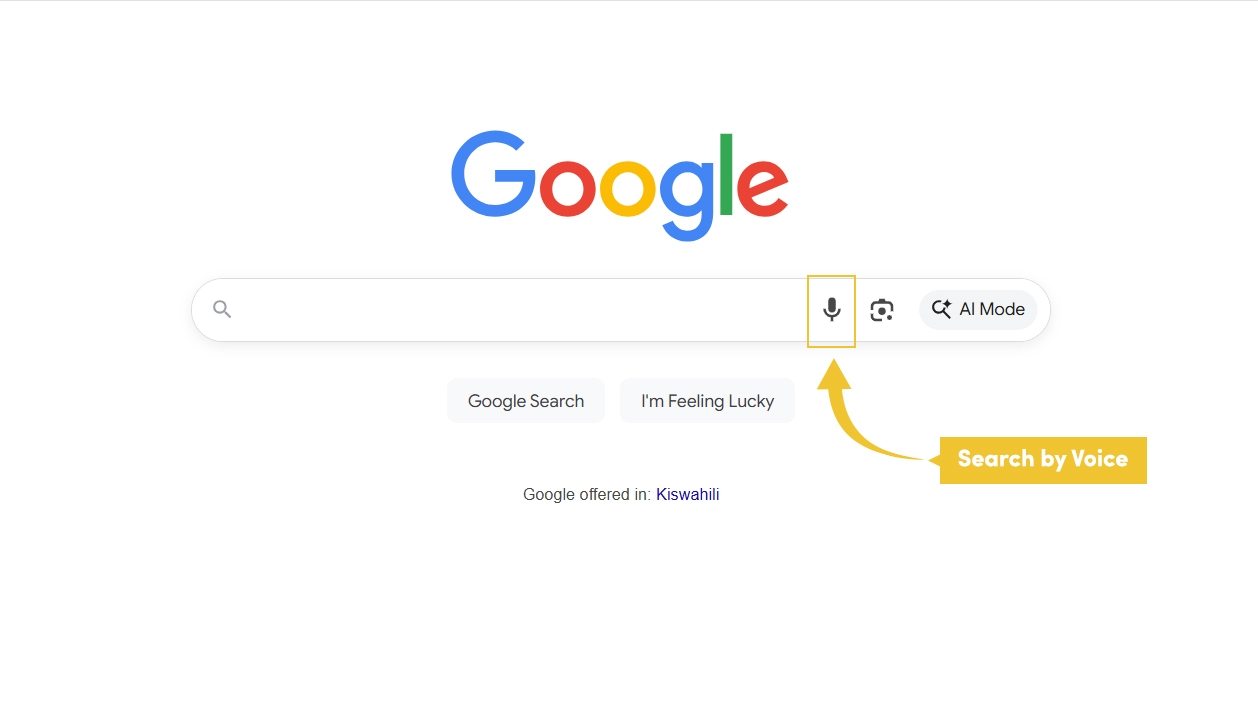
Voice and AI SEO Strategies
- Optimize for Conversational Queries
Voice and AI systems interpret queries the way humans speak, conversationally and contextually.
To optimize for this:
- Use long-tail keywords and question phrases, such as:
- “How to optimize for voice search”
- “What is AI search optimization?”
- “Best tools for voice search SEO”
- Write in a natural tone, as if answering a real question in real time.
- Structure content using Q&A-style headings with concise answers (40–50 words).
This approach increases eligibility for featured snippets and voice assistant responses from platforms such as Alexa, Siri, and Google Assistant.
- Target Featured Snippets and Voice Search Results
Voice assistants frequently source responses from featured snippets that appear above traditional organic listings. While prevalence varies by query type, these positions remain the most reliable entry point for voice responses.
To improve eligibility:
- Place direct, factual answers immediately after headings.
- Use bullet points, lists, or step-by-step formats for clarity.
- Add schema markup, particularly FAQPage or HowTo, to reinforce structure for AI-driven summarization.
- Use Schema Markup to Power Voice and AI Search
Schema markup acts as a translation layer between your content and AI systems, reducing ambiguity by turning information into structured signals.
For example, the openingHours schema clearly communicates operating times. Without it, AI systems may rely on inconsistent third-party sources.
More importantly, schema supports entity resolution. AI systems do not simply rank pages. They identify entities and assess their attributes across the web. Schema helps AI understand who you are, what you represent, and how consistently you are referenced.
Here are the must-have schema types for AI citation and voice visibility:
- Organization / Person Schema: Establishes entity identity and authorship, reinforcing authority and trust.
- FAQ / HowTo Schema: Structures experience-based knowledge for efficient AI extraction.
- Review / AggregateRating Schema: Provides sentiment signals used by AI to assess credibility.
- Article / BlogPosting Schema: Confirms content type and topical focus over time.
In AI-assisted search, consistent reviews and authorship signals are often primary indicators of trust.
- Build Around Search Intent Optimization
Every page should align with the intent behind the query – the goal behind a search.
Key intent types:
- Informational: Queries like “How AI is changing SEO” seek understanding. Clear explanations supported by Article or FAQ schema improve AI comprehension.
- Transactional: Queries such as “voice SEO for local businesses” require comparisons, benefits, or decision support. Structured data and reviews help establish confidence.
- Navigational: Queries like “optimizing Google Business Profile for voice” are entity-focused. Internal linking and Organization or LocalBusiness schema improve discoverability.
Intent alignment improves both usability and AI interpretation, supporting search experience optimization (SXO).
- Strengthen Technical and Mobile Voice SEO
Most voice searches occur on mobile devices, making performance and usability critical.
Key priorities:
- Optimize Core Web Vitals (speed, responsiveness, stability).
- Use HTTPS and structured data.
- Maintain clean layouts and intuitive navigation.
These factors influence both traditional rankings and voice response eligibility.
- Enhance Local Voice Search Optimization
Voice search and local intent go hand in hand. In fact, 58% of consumers use voice search to find local businesses, especially for “near me” queries.
To improve local visibility:
- Keep Google Business Profile details accurate and up to date.
- Implement the LocalBusiness schema to validate this information.
- Encourage authentic customer reviews, which AI systems use to infer quality and relevance.
For small businesses, these signals directly influence whether voice assistants recommend your brand.
- Track and Optimize for AI + Voice Search Performance
Optimization requires ongoing measurement.
Group tools by function:
- Discovery: AnswerThePublic, AlsoAsked, Keyword Insights, uncover conversational query patterns.
- Optimization: Frase, Surfer SEO, refine clarity, structure, and AI readability.
- Measurement: Google Search Console, Google Analytics 4, monitor query performance and engagement.
- Entity & AI Visibility: InLinks, Kalicube Pro, track entity recognition and AI citation signals.
Additionally, test visibility directly within ChatGPT, Perplexity, and Gemini to understand how AI systems interpret and summarize your brand.
- The Future: Predictive and Multimodal Search
Search is expanding beyond text and voice. AI systems increasingly combine voice, image, and text inputs into multimodal experiences.
Preparation steps include:
- Adding descriptive alt text and metadata.
- Providing transcriptions for audio and video.
- Clearly summarizing key takeaways.
These practices support both traditional rankings and AI-driven recommendations.
Bringing It All Together
Voice search and AI-driven SEO represent a single, converging ecosystem. Success depends on precision, structure, and adaptability.
- To compete effectively:
- Write conversationally and clearly.
- Structure content for snippets and voice responses.
- Apply schema to reinforce meaning.
- Optimize for intent and mobile performance.
- Build a consistent, trustworthy digital entity through authorship and reviews.
These actions help AI systems recognize, trust, and recommend your brand.
Conclusion
Search is moving toward AI- and voice-first discovery. Clarity, context, and structure now outweigh scale alone.
Brands that adapt to entity-based SEO and structured data will maintain visibility. Those that do not risk becoming invisible, not only to users, but also to AI systems interpreting the web.
FAQs on Optimizing for Voice Search and AI Queries
1. What is voice search optimization?
Voice search optimization structures content so it can be easily interpreted and read aloud by voice assistants, emphasizing natural language and concise answers.
2. How does AI change SEO in 2026 and beyond?
AI-driven search systems interpret intent, meaning, and context. Modern SEO focuses on alignment with AI understanding, not just keyword matching.
3. Why is schema markup important for voice search?
Schema clarifies meaning and entity attributes, improving eligibility for spoken responses and AI summaries.
4. What type of content performs best in voice and AI search?
Conversational, well-structured content with clear sections, FAQs, and schema support performs best.
5. How can small businesses optimize for local voice search?
Maintain accurate business listings, implement LocalBusiness schema, and collect genuine reviews to strengthen AI recommendations.
6. How does AI assist in optimizing for voice search?
AI assists voice search optimization by analyzing conversational patterns, user intent, and contextual signals behind spoken queries. It helps search engines understand meaning rather than exact phrasing, select concise answers for voice responses, and connect queries to trusted entities. Aligning content with AI interpretation through structured data and consistent entity signals improves voice search visibility.

Karingithi Benard
Karingithi Benard is an SEO Specialist, Wordpress Developer and a Digital Designer with over 7 years of experience delivering secure, performance-driven WordPress websites across healthcare, eCommerce, technology, travel, and entertainment.
Great article on voice search and AI optimization. It’s fascinating how conversational queries are reshaping SEO. One question I had is how you would recommend optimizing for AI-driven platforms when it comes to local business visibility. I’ve seen approaches that focus on strengthening both Apple Maps and Google Business Profiles to capture traffic from AI assistants like ChatGPT and Gemini. Do you think this dual-platform strategy aligns with the voice search techniques you’ve outlined here?
Great question. Optimizing for AI-driven platforms closely mirrors strong local SEO fundamentals, with more emphasis on conversational intent and entity clarity. Focusing on both Google Business Profiles and Apple Maps makes sense since AI assistants pull from different data sources. Keeping listings accurate, well-categorized, and consistently updated aligns well with how voice search and AI surface local results.